Riki Oh: The Wall of Hell is an INSANELY prophetic movie with awesome visuals and unbelievable martial arts/horror/superhero action!
Riki Oh: The Story of Ricky is a movie that needs no introduction. Except for the one I’m about to give it.
The absurdly violent 1991 Hong Kong action/splatter movie has had an incredible trajectory over the last few decades. When it first came out, it was seen as an absolute masterpiece of trash cinema; a poorly-directed, poorly-filmed, poorly-scripted, poorly-acted and poorly-edited movie that somehow managed to be one of the most entertaining and amusing bloodbaths in cinema history. The absolutely gonzo gore and psychotic storyline made Riki Oh an instant hit with connoisseurs of “bad” movies — it was an automatic cult classic if there ever was one.
Well, fast forward a few years, and that same film is now streaming on the Criterion Channel alongside the works of Akira Kurosawa and Ingmar Bergman. What the hell happened there?
As it turns out, that silly, plasma-strewn martial arts movie from the early ‘90s was eerily prophetic in a number of ways. Which makes its source inspiration — a manga whose run began in 1987 — even more prescient in hindsight.
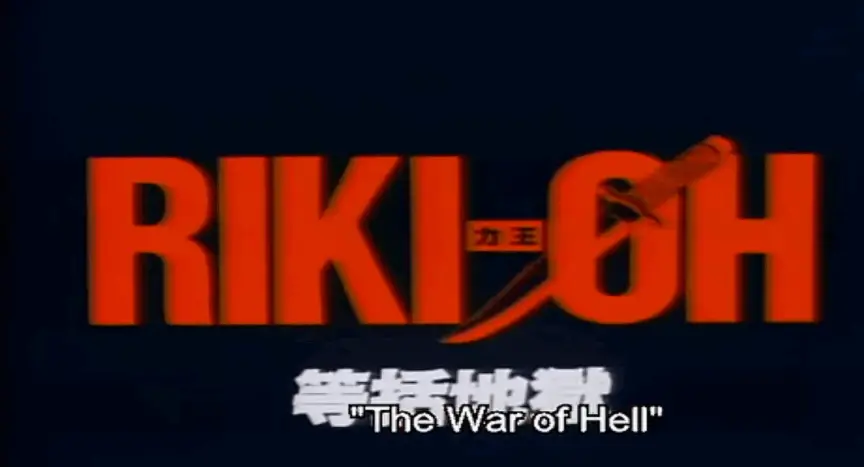
In between the comic and the live-action film, though, is something of a missing link in the Riki Oh lore. Enter Riki Oh: The Wall of Hell, an anime from 1989.
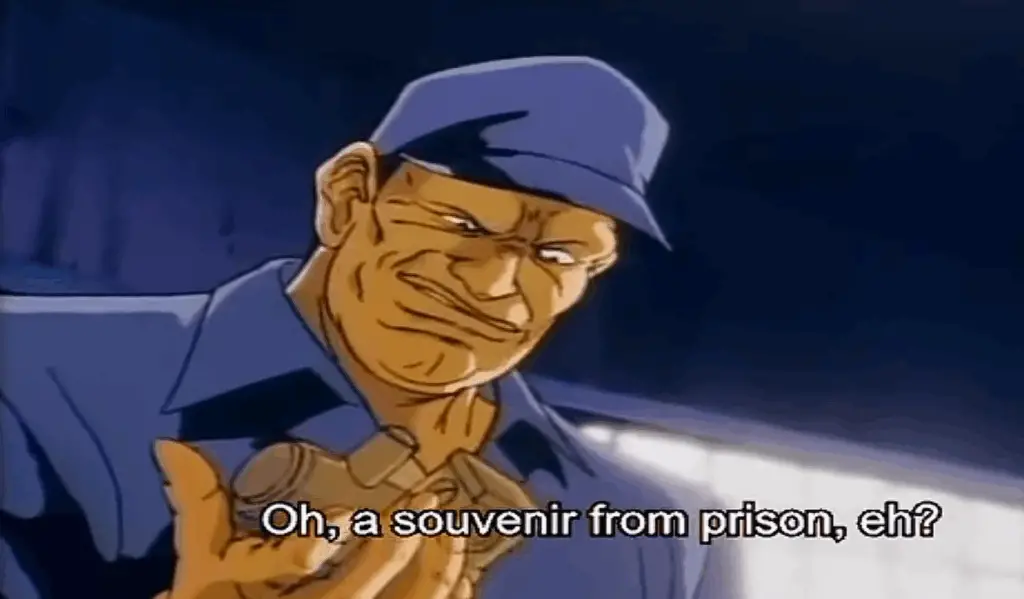

If you’ve seen the live action Riki Oh, then The Wall of Hell should feel very familiar to you. Structurally and narratively, it’s pretty much the same story, only with a few aesthetic tweaks here and there. The jury’s still out whether the material works better in live action or animated, but on the whole The Wall of Hell feels a bit more serious than the 1991 movie. Yes, it has its moments of outlandish violence, but it doesn’t feel AS over the top and ridiculous. For an anime that’s barely 40 minutes long, it omits very little from what we’d see in the later, live-action production.
The story of The Wall of Hell is pretty straight forward. Riki, of course, is our main character — this musclebound demigod with a goofy anime mullet haircut who is absurdly, preposterously strong. As in, he can punch people so hard they die instantly. In fact, he’s so strong he can NOT punch people and they still die horrific, gruesome deaths, anyway. We’ll get back to this plot point later in the article.
In hindsight, the amount of material covered in The Wall of Hell is downright STAGGERING. It’s a movie about a techno surveillance state, it’s a movie about the overreach of privatized prisons, it’s a movie about climate change and it’s a movie about corrupt companies making a killing in the opioid trade. In a movie that’s almost 40 years old at this point. The extent to which The Wall of Hell so accurately predicted our modern world is kind of scary; I mean, there’s nothing in here about smart phones and Ozempic, but beyond that, it’s right on the bullseye.
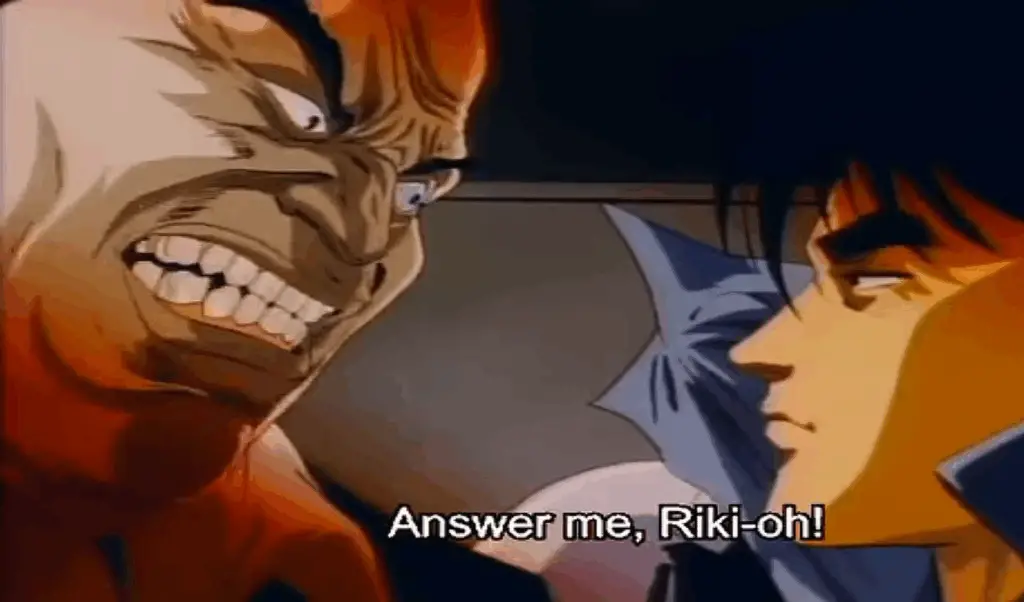
The Wall of Hell is basically three movies rolled into one: a horror film about prison life, a horror film about revenge and a horror film about … well, just plain horror. The movie starts off fairly realistic, but it isn’t long until The Wall of Hell starts throwing anatomically impossible bad guys at us — these humongous, ultra-roided up monsters that could only exist as enemies in a Double Dragon game. Of course, compared to the live action movie the character design is still pretty subdued — which ought to tell you just how zany the 1991 movie truly is.
As you’d imagine, the super max prison in The Wall of Hell is not a nice place to be. Nerdy, nebbish guys up for parole get beat up and have their faces sliced open by sociopathic inmates who are in cahoots with the even more sociopathic prison guards and their even more sociopathic than that warden. It’s a pretty reliable system of de facto slave labor — that is, until Riki shows up and starts meting out a little personal vengeance.
You pretty much know where the story is headed, but that’s not a problem in the slightest. We get a little bit of exposition on Riki while he’s stuck in solitary confinement, then it’s right back to the straight up Mortal Kombat mayhem. There is a LOT of blood and guts and impalements and eyeball injuries and powdered glass in this movie — then, there’s some really gruesome stuff, too.
There’s really only two major changes in this anime compared to the ‘91 movie. One of the major sympathetic characters here is an actual child, who is stuck in an adult prison filled with murderers and rapists and tax cheats because … well, Republicans, probably. Without spoiling too much, let’s just say he gives Riki AMPLE reason to want revenge on literally everybody earning a paycheck at the prison.
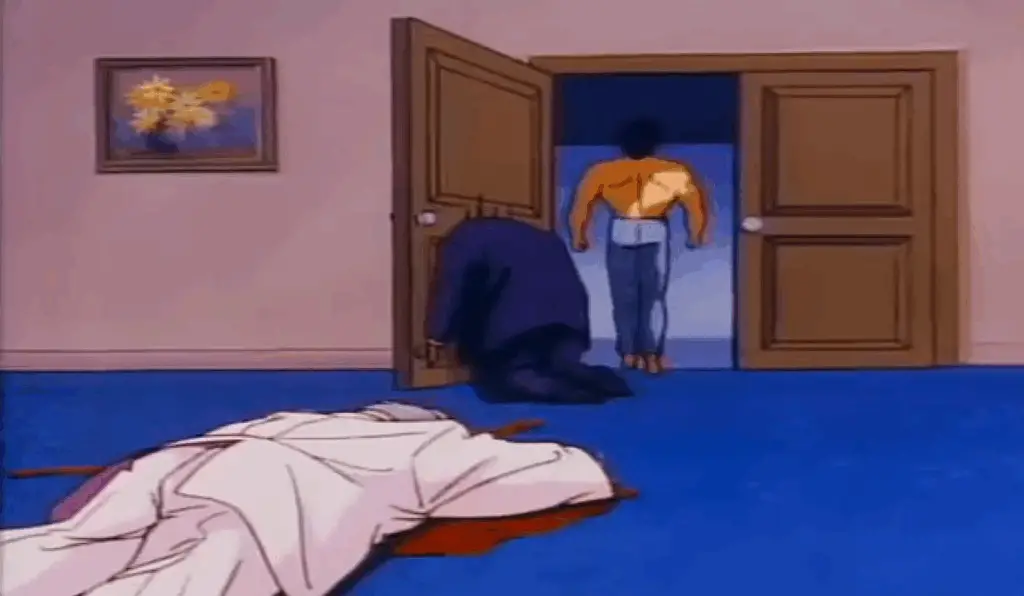
The other big change is the climactic showdown. In the ‘91 movie the warden, for no discernible reason whatsoever, turns into a hulking, mutant freak before getting kung-fu’ed to death by our hero. Well, in this movie, Riki finishes him off by almost punching him … except the cosmic force of his fist STILL causes the warden’s face to contort and ripple and implode. It’s a hard scene to describe, but when you see it, you’ll be all like “yeah, that jerk deserved that right there.”
It’s GREAT stuff. I still think the live-action adaptation is better but this is fantastic material in its own right. It’s visually striking, it has a LOT of important sociopolitical undertones, there’s a few genuinely touching moments (like the part where Riki symbolically breaks the handcuffs on a dead man’s wrists) and it does preposterous, off-the-wall violence about as well as ANY anime you’ll ever see in your life.
If you’ve got 40 minutes or so to spare, The Wall of Hell is TOTALLY worth checking out, especially if you don’t normally watch anime. Great horror storytelling is wherever you can find it — and you’ll definitely find it in The Wall of Hell.