
The 1935 Swedish thriller Walpurgis Night feels eerily relevant today
A movie like Walpurgis Night requires a little context. For starters, the title is a reference to a European observance in honor of Saint Walpurga, who purportedly drove “witchcraft” out of what is today Germany in the 8th century. The holiday, which falls on April 30 each year, is celebrated with bonfires — symbolic forms of “protection” against “evil spirits.” It’s sort of a gothic Christian counterpoint to May Day, albeit with a lot of strangely overlapping iconography.
It’s not a coincidence that Gustaf Edgren’s 1935 film shares its namesake with the holiday. Walpurgis Night isn’t technically or explicitly about the holiday, per se, but there are a lot of parallels going on that I’m sure are anything but accidental. Watching the film today, its themes and overarching plot dynamics feel eerily prescient and shockingly relevant to our contemporary political climate, especially when it comes to reproductive rights. You could pretty much remake this movie tomorrow and not have to change a single line of dialogue.
Calling Walpurgis Night a “traditional” horror film is a stretch. But you have to remember, the “horror” genre label itself wasn’t en vogue until the late 1930s. Before then, movies like The Golem, The Cabinet of Doctor Caligari and even the first few Universal Monster movies were marketed more as supernatural-flavored morality plays then straight up popcorn shockers. Before movie studios realized people would pay to see movies that scared them, they usually marketed proto-horror films as moralizing melodramas meant to reinforce certain virtues and values, with death, disease and the occasional dismemberment being the price for not following the rules.

A different kind of “slow burn”
Walpurgis Night is something of a morality play, albeit one that’s a bit more opaque than something like The Student of Prague. I guess the best one-to-one comparison today would be calling it a thriller with romantic overtones that, the longer you think about it, aren’t really romantic at all. Imagine Detour directed by Ingmar Bergman and you kind of get the idea.
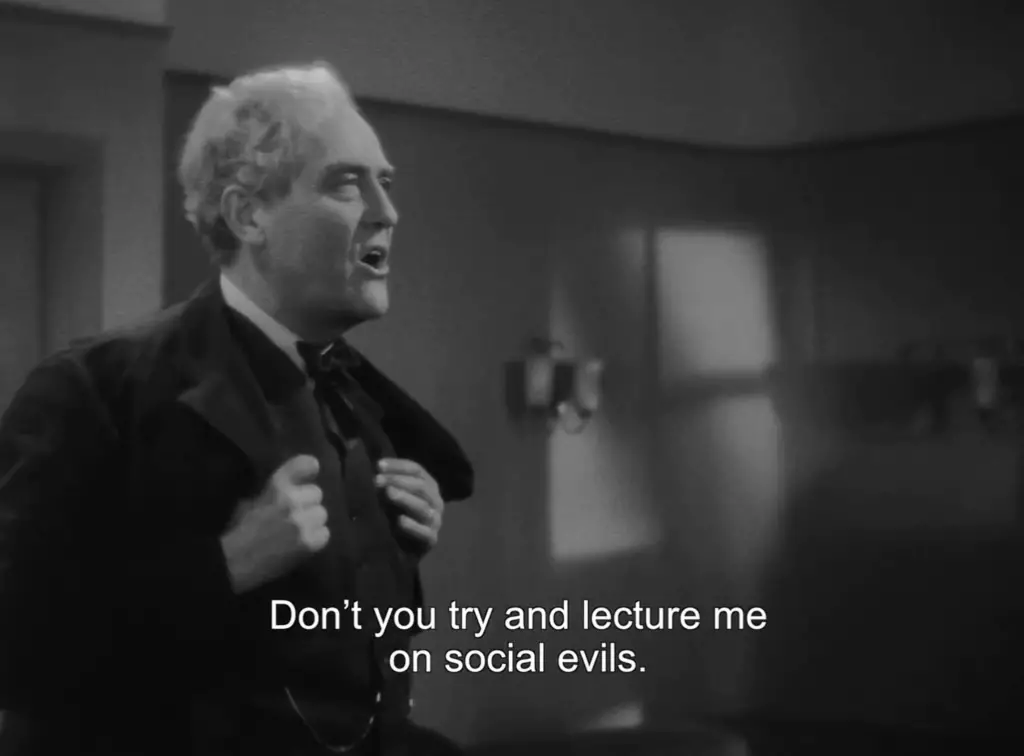
The film covers a LOT of thematic territory. It opens with an old newspaper editor (played by Victor Sjostrom, an accomplished director who helmed The Phantom Carriage and He Who Gets Slapped and later starred as the main character in Wild Strawberries) bemoaning Sweden’s dwindling birth rate and what ought to be done to “correct” the numbers. One of the younger guys in the office says they won’t improve until there’s more affordable housing in the country, while Sjostrom’s character chalks it all up as a general “lack of love” in society as a whole. It feels like something you’d hear on a Man-O-Sphere-adjacent podcast today, and remember: this movie was made before World War II even happened.
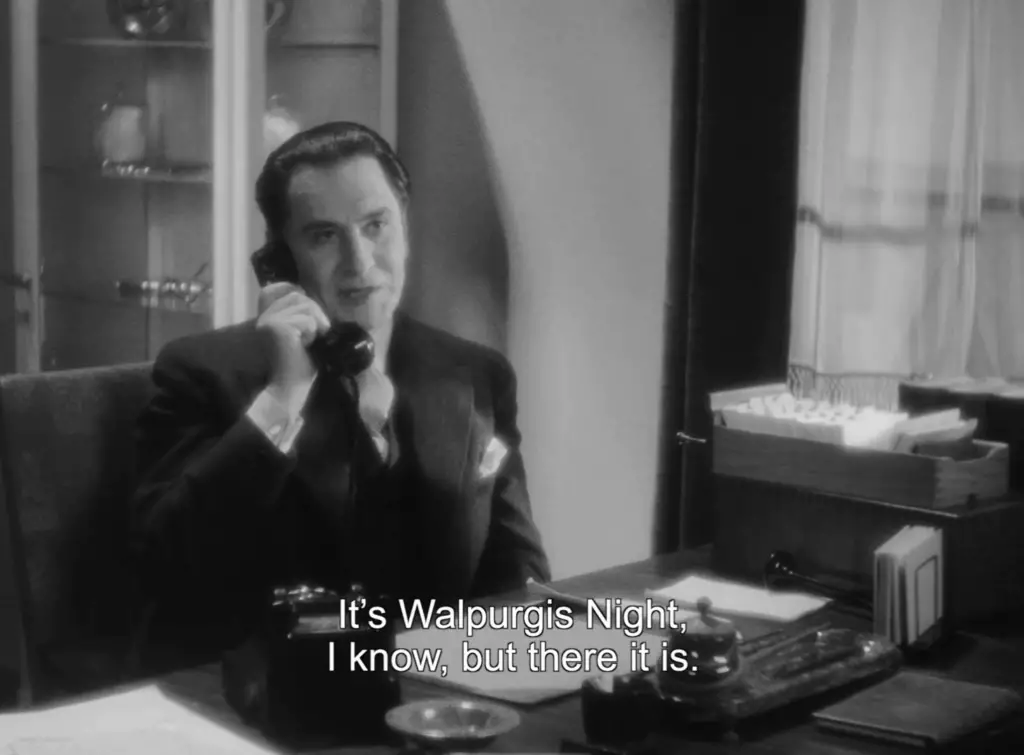
And that’s our segue into the meat of the movie, so to speak. Sjostrom’s daughter (played by Ingrid Bergman) is in love (or is it just lust?) with her boss, who just so happens to be married. Rather conveniently, the wife of the boss character (played by Lars Hanson) suddenly leaves him and gives Ingrid the perfect opportunity to cuddle up with her verboten objection of attraction. Alas, the two are photographed by paparazzi at the annual Walpurgis Night festivities and things quickly start to spiral out of control.
The plot thickens
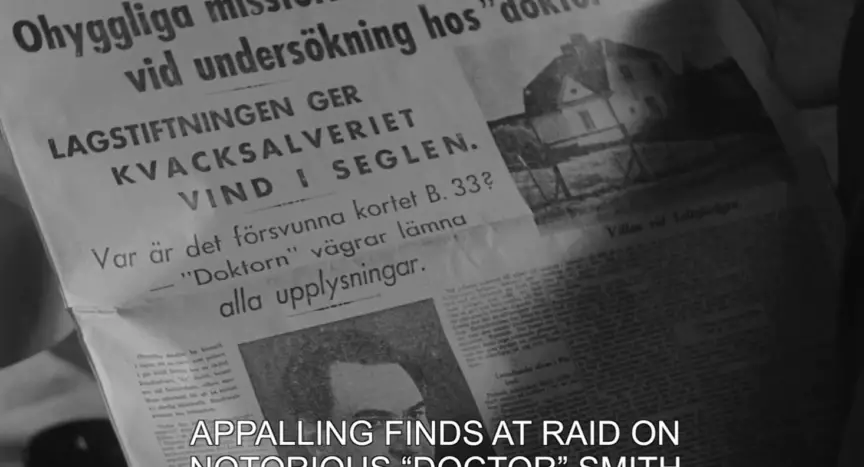
Now here’s where the movie starts getting into some deep waters. It’s revealed that Hanson’s wife left him so she could visit a black market “physician” to get an abortion. Shortly thereafter the unlicensed clinic is raided and some nefarious sorts seize the doctor’s records so they can begin a campaign of harassing and blackmailing women who had abortion procedures. From there, there’s a lot of Hitchcockian twists and turns, complete with mistaken identities, at least one prominent cast member getting gunned down and a MAJOR spoiler involving suicide. Oh, and right before the movie is over, it throws the aftermath of a public execution at us, just to make sure we definitely leave the theater in a sullen mood.
It’s the kind of movie that demonstrates just how forward thinking European filmmakers were at the time. It’s almost impossible to imagine a big American studio making a movie about abortion mills, murder plots and condemnation of institutional misogyny in 1935 — for that matter, it doesn’t seem that feasible even today. Walpurgis Night is a movie that blurs so many genre lines that you’re not sure WHAT you’re supposed to feel at times. It’s a movie that doesn’t necessarily paint its characters in simple moral tones; in fact, just about every character in the movie is some indistinct shade of gray in terms of their actions and principles. Yet despite all of that, it never comes off as cynical or nihilistic. It’s certainly not an uplifting movie by any means, but to call it flat-out distressing and disturbing would also be a misnomer.
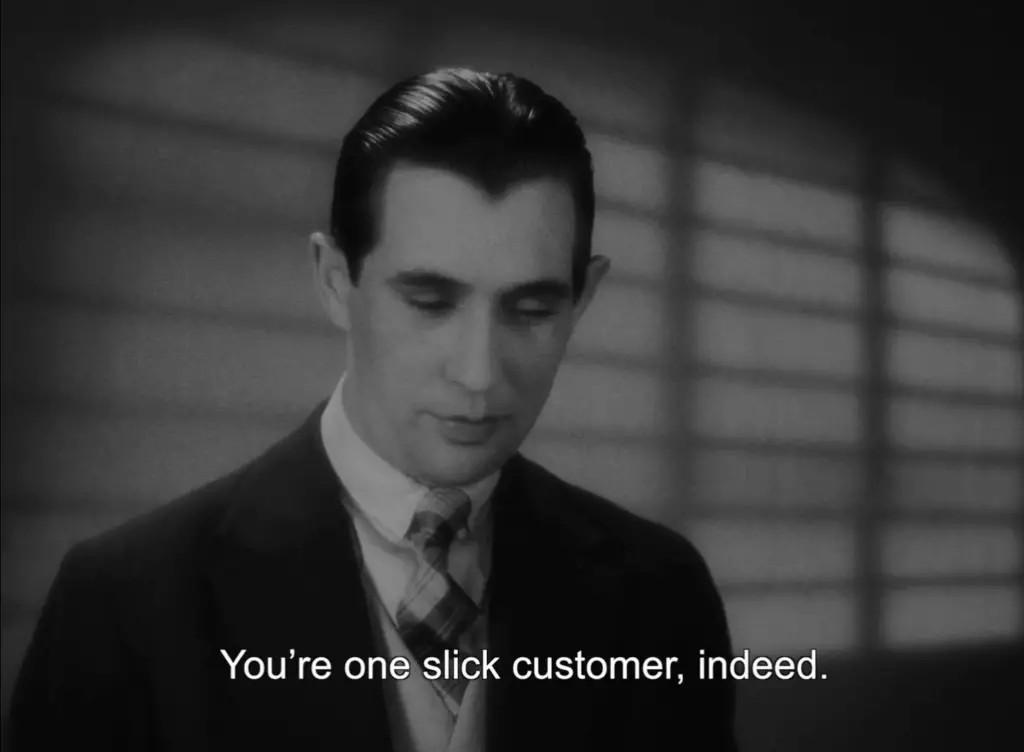
There’s so much going on in the film that it seems like it would be a mess. But the director keeps everything in harmony — or, at least, as much harmony as you can have in a film that’s literally about adultery, extortion schemes and back alley abortions. It’s a bit of a genre-fluid movie; sometimes it feels like a traditional family melodrama, sometimes it feels like a suspense flick and sometimes it feels like a rom-com (albeit, a rom-com with a surprisingly high body count.) One minute you see the cast doing stereotypically quaint Swedish things like skiing and sailing, and the next you watch an incensed father verbally eviscerate his own daughter in a scene that’s more frightening than just about any of the kills we got out of the Hostel movies. There’s definitely an undercurrent of psychological horror pulsing through the veins of the film, even if it may not seem like it on a superficial level.
A Walpurgis Night to remember
Walpurgis Night, obviously, is not a film for everybody. It’s a bit slow at times and it’s one of those movies where you have to pay very close attention to every single morsel of dialogue. It’s about as far away as you can get from something like Sleepaway Camp III or Friday the 13th Part V in terms of presentation, but in terms of substance and subtext, it’s definitely diving into some deep, dark and troubling territory.
With its themes about overzealous tabloid journalists, reproduction rights, health care access and gender roles in society, Walpurgis Night definitely doesn’t feel like a movie that came out more than 90 years ago. And perhaps that’s the most terrifying thing about the entire movie — how it demonstrates how little things regarding certain (and extremely important) social issues have changed over the course of a century.


