Sidney Williams revisits Horror Times Ten from 1967, featuring a story that MAY have influenced Stephen King’s It!
We’re in the heart of spooky season now, and another vintage paperback from my junior high days still helps define the season for me. At least in my memory the air turned crisp and cool in early October, and as Halloween decorations appeared, the desire to read scary stories manifest. In addition to Gooseflesh! that I mentioned last month, Scholastic offered a second anthology of pulp tales via an in-school sale paper. That included a masterful tale from August Derleth as well as more Ray Bradbury, an early ghost story of sorts by Sir Arthur Conan Doyle and a symbolically and literally chilling stand-alone tale from H.P. Lovecraft.The collection was Horror Times Ten (Berkley Medallion, 1967).
There must have been extra copies on hand because it was served up in the mid-‘70s along with the then-recent Gooseflesh! It’s one of several collections edited by magazine editor Alden H. Norton with notes by his frequent collaborator Sam Moskowitz. The Science Fiction Encyclopedia suggests Moskowitz may have done more of the heavy lifting in selecting for their collections.
Whoever was responsible, I would have loved to have found more of their collections back in the day, but at least I got this one.
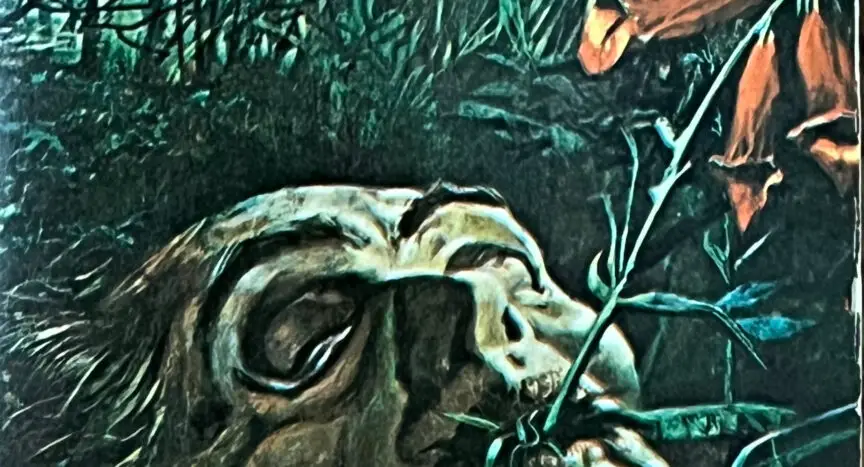
The cover art for Horror Times Ten actually includes flower blossoms, but it conjures a spooky season/autumn feel. Perhaps it’s the slightly dulled colors of a field of weeds and the tanned face of a deceased figure filling the bottom third of the cover painting. Did I mention the flowers are growing out of the corpse’s mouth?
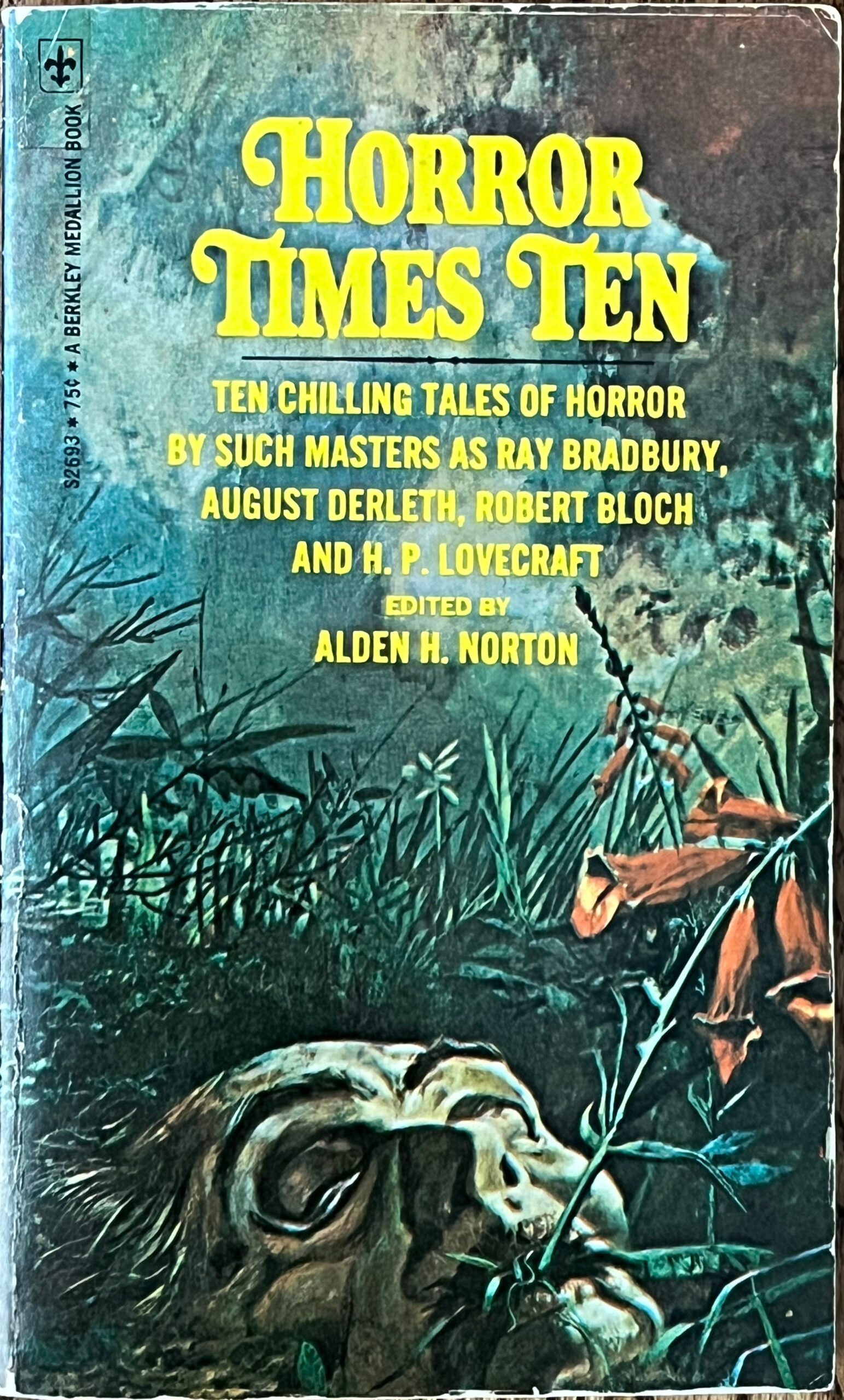

It’s certainly appropriate art for the collection that includes several forgotten bodies and other horrors in its pages.
The Derleth tale is “The Lonesome Place,” a 1948 story published in Fantastic Adventures. I’ve long thought of it as a favorite. Maybe it’s a perfect horror story.
It suggests a great deal while not having monsters directly on stage. The lonesome place in the tale is an alley, and the narrator confides that most local kids fear it. When sent for groceries in the evening, kids run past in a hurry in hopes of escaping what might dwell in the shadowy depths of the passage …
“You were never afraid of it by day, but by night it was a different place; for then it was lonesome, away from sight or sound, a place of darkness and strangeness, a place of terror for little boys haunted by a thousand fears.”
And gradually, the imaginations of the little boys work to possibly make something real in the shadows. The story has always seemed like an early version of Stephen King’s It, capturing childhood fears and anxiety coupled with imagination. I think it still has the ability to make you shiver.
The Bradbury tale in the mix is more a crime story—it’s reprinted in Killer Come Back to Me from Hard Case Crime—but it delivers mood and atmosphere in a horror vein as a young boy finds a woman’s body in a trunk in his family’s attic. In “The Trunk Lady,” he can’t seem to get the adults around him to listen, and his Uncle Flinny keeps talking about a Dark One Chased into a dark land.
The Lovecraft in the mix is perhaps one of his most famous non-mythos tales, “Cool Air.” It’s horror with a touch of science fiction, an overreacher tale of a man with a very cold apartment who has grave problems when an extended power outage occurs that explains why long after the events of the story the narrator hates to tickle of a draft of cool air. It’s also well worth a look for contemporary readers, and it got a Night Gallery adaptation that makes alterations but is still pretty effective.
“The Captain of the `Pole Star’” proved a little subtle for me when I was young, but it’s another cool story, if you will, told by the ship’s doctor on a ship sailing into the arctic. The captain grows stranger as the ship travels further and further north until an expanse of frozen ocean and perhaps sad memories beckon to him. The image of the white expanse of ice is vivid and also proves no old dark house is required for a tale of terror.
Robert Bloch’s represented in the collection by a tale with his signature injection of humor. In “The Skeleton in the Closet,” Bloch’s tone becomes apparent in the opening line. “When I opened the closet door, I saw the skeleton. He was hanging there on the third hook from the left.”
The collection also includes tales by Conan creator Robert E. Howard, Max Brand of western fame and one woman writer credited as Dorothy Baker, though apparently actually Gertrude Bacon. All of the tales have strong merits, making this a powerhouse collection of early horror.
The collection certainly helped make October spooky for me, and I think it still has the power to do that today.