Guest columnist Søren Kamper revisits Star Wars: Knights of the Old Republic II — and the level that turned a familiar space fantasy into a nightmare!
Star Wars: Knights of the Old Republic II: The Sith Lords is remembered as the strange, philosophical one.
It questions the Jedi, distrusts easy morality and gives nearly every conversation the feeling that somebody is quietly dismantling your worldview. But before Kreia begins turning the Force into a graduate seminar, KOTOR II does something even more unexpected.
It becomes a survival-horror game.
The Peragus mining facility has no xenomorphs, zombies or health-restoring typewriters. It is still unmistakably Star Wars, complete with droids, vibroblades and enough computer terminals to keep an Old Republic technician employed for life.
Yet its opening uses the basic language of survival horror with remarkable confidence: isolation, vulnerability, dead workers, unreliable voices and an enemy the player cannot initially see.
Star Wars has always contained flashes of horror. Wicked Horror has previously highlighted the Dark Side cave in The Empire Strikes Back as one of the franchise’s clearest nightmare sequences.
Peragus takes that unease and sustains it for several hours.
It may not be the most beloved opening in Star Wars gaming.
It is the most effectively frightening.
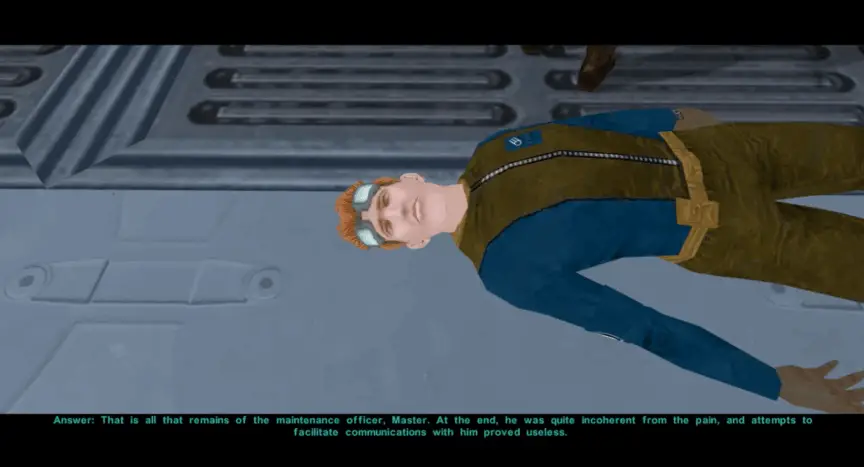
You Wake Up After the Horror Movie Has Ended
The player begins inside a kolto tank with no clear memory of how they arrived.
The mining facility is largely silent. Medical equipment still works. Doors remain sealed. Droids continue performing tasks.
Almost everyone else is dead.
That last detail matters because Peragus does not begin with the disaster. It begins with the aftermath.
You are not trying to stop something terrible from happening. You are walking through evidence that it already did.
This is one of horror’s most reliable setups: the apparently abandoned location that is not quite abandoned enough.
Machinery continues humming because machines do not care that the people operating them have been murdered. Lights flicker across corridors built for workers who will never return.
The clean industrial surfaces make the facility more unsettling, not less. Peragus is not an ancient Sith tomb advertising its evil through skulls, chanting and suspiciously placed red lighting.
It is a workplace.
People had shifts here. They complained about one another and worried about quotas until the station became a crime scene.
The horror comes from watching normality continue after everyone responsible for it has vanished.
The Dead Tell the Story in Fragments
Peragus rarely gives the player a complete explanation.
Instead, the story is reconstructed from medical records, security footage, damaged logs and conversations preserved on terminals. Each discovery answers one question while creating another.
A miner was injured.
The administration became suspicious.
Someone wanted the unconscious Jedi sold.
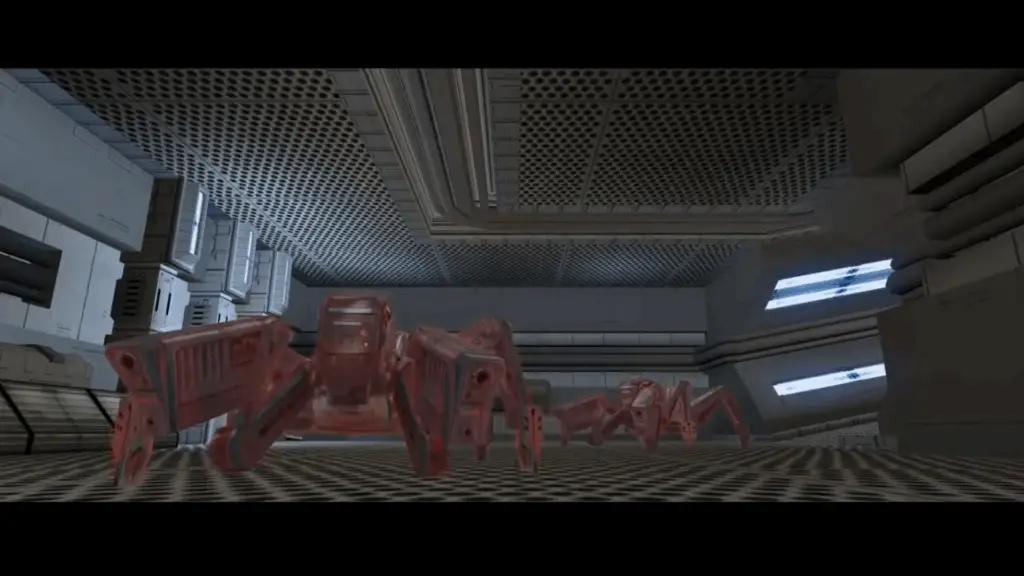
Maintenance droids began behaving strangely.
The facility’s systems were altered from inside.
These fragments reveal that the deaths were not caused by an industrial accident. Someone planned the disaster, manipulated the workers and used the station’s own machinery against them.
Environmental storytelling is now so common that players barely notice it until a game does it badly.
Peragus does it well because the logs are not detached collectibles offering background information about people who died centuries earlier. They are part of an investigation still unfolding around the player.
Information becomes a survival tool.
A recording can reveal which door was opened, which system was sabotaged or which person was lying. The player progresses by understanding the dead rather than simply stepping over them.
There is also something voyeuristic about watching the miners during their final hours through fixed security-camera angles.
They do not know they are being observed by someone who will later piece together their deaths.
Peragus turns surveillance footage into ghost stories.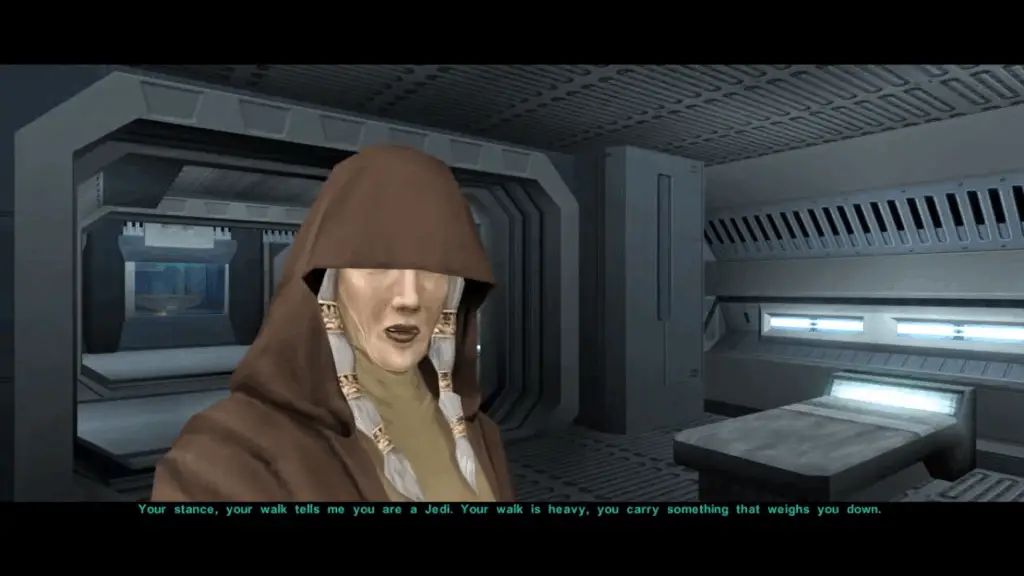

The Helpful Voice Is the Monster
HK-50 is one of the level’s best horror devices because he initially sounds useful.
He speaks politely, provides information and appears to be another eccentric Star Wars droid in a franchise full of machines with inconvenient personalities.
Then the wording starts to feel wrong.
His concern is too clinical. His explanations are carefully incomplete. He keeps guiding the player without offering anything that might reveal his actual role.
HK-50 remains cheerful and bureaucratic while discussing murder, manipulation and ownership. That contrast is creepier than a droid suddenly developing a demonic voice.
The Star Wars galaxy encourages us to trust talkative machines. R2-D2 and C-3PO taught audiences that droids can be friends, comic relief and reliable companions.
HK-50 uses that expectation against the player.
He is the helpful voice who already knows where the bodies are buried because he arranged the burial schedule.
Peragus Makes an RPG Player Feel Weak
Survival horror depends on vulnerability, and KOTOR II has an unusual problem in creating it.
The player character is a former Jedi.
That should make most mining-station threats feel temporary. Give the Exile a lightsaber, a robe and a few levels, and hostile maintenance droids become scrap metal with appointment times.
Peragus solves this by stripping away the Jedi power fantasy.
The player begins under-equipped, separated from companions and unsure of their history. Weapons are improvised or recovered from dead workers. Healing supplies matter.
Repair, security and computer skills feel essential because brute force is not yet the universal answer.
Even the Force initially feels more like a damaged memory than a superpower.
Peragus also refuses to deliver the immediate freedom many players expected after the first Knights of the Old Republic.
There is no bustling city, no cantina full of side quests and no convenient shop selling everything a newly awakened exile might need.
There are corridors, locked doors and the growing certainty that someone wants you dead.
The level makes the player earn the return of the Star Wars power fantasy by first taking it away.
Nobody Makes the Station Feel Safer
Finding another living person should reduce the tension.
Kreia manages the opposite.
She is calm, secretive and already knows more than she intends to explain. Her presence offers practical reassurance but no emotional comfort.
She speaks like somebody who has read the final page and is deciding which parts of the book you deserve to see.
Atton Rand is more recognizably human, but the first thing the player learns about him is that somebody locked him in a cage.
Peragus gives the Exile company without giving the player certainty. Complete solitude fades, but the fear of trusting the wrong person replaces it.
KOTOR II will spend the rest of the game asking whether influence is friendship, manipulation or something in between.
Peragus starts asking before the player has found a proper jacket.
The Harbinger Is a Ghost Ship
Just as the mystery begins to make sense, the Harbinger arrives.
This should be good news. A Republic ship means rescue, authority and people who can explain what happened.
Instead, it docks in silence.
The Harbinger is one of the finest haunted-ship sequences in a non-horror game. Its corridors are intact, but its crew is gone.
Logs reveal confusion, secrecy and a medical patient who should not have been alive.
Then the player sees Darth Sion.
Sion’s design belongs to body horror as much as Star Wars. He is a corpse held together by pain, rage and the Force, a walking wound that has refused to finish dying.
He does not need elaborate movement or dialogue to seem unnatural. His body is already an argument against nature.
The Sith Assassins deepen the threat. They do not charge down the hall in bright armor.
They hide through the Force and appear only when they are ready to strike.
Peragus spends hours teaching the player to fear empty corridors.
The Harbinger finally explains why.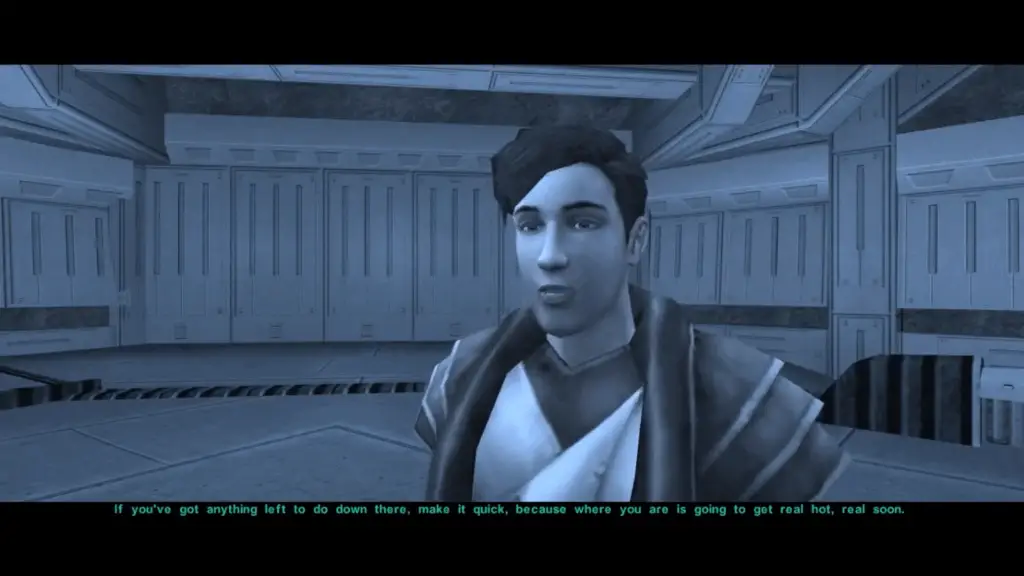
Why So Many Players Want to Escape Peragus
Peragus is divisive for many of the same reasons it works as horror.
It is restrictive, lonely and slow. It withholds the broad exploration, colorful planets and party dynamics associated with the first game.
Repeat playthroughs also weaken the mystery because the player knows what happened and which friendly voice is lying.
A horror sequence built around uncertainty naturally loses some power once everything is understood.
There is also no denying that Peragus is long. Players eager to build a Jedi, choose companions and explore the galaxy may feel trapped inside an extended tutorial with excellent corpse placement.
That frustration is legitimate.
But it also reveals how deliberately the level resists the expected pleasures of a Star Wars RPG.
The first KOTOR pushes the player into a galactic adventure. The sequel wakes them in a sealed room and asks whether they can survive long enough to understand why the adventure is hunting them.
Within the complete history of Star Wars video games, few openings are this committed to denying the player what the franchise normally promises.
Our broader retrospective on Knights of the Old Republic II looks at how that discomfort continues throughout the game.
Peragus is where the thesis begins.
Star Wars Horror Works Best When It Withholds Star Wars
Wicked Horror often explores whether horror can exist inside something carrying a different genre label.
Peragus does not need the official classification.
It lacks traditional inventory panic and eventually becomes part of a much larger RPG. The player grows stronger. The galaxy opens. Companions gather around the Exile.
Familiar pleasures return.
For a few hours, however, Peragus removes almost everything comforting about Star Wars.
There is no heroic music carrying the player forward. No wise mentor can be trusted completely. The Republic ship is a tomb. The comic-relief droid is a murderer.
The Sith are not political villains giving speeches.
They are shapes waiting for the corridor to go dark.
That is why Peragus remains the best survival-horror level Star Wars has produced.
Other games have offered zombies, haunted tombs, monsters and darker imagery. Peragus does something more difficult.
It creates horror through structure.
It makes the player isolated before introducing companionship, weak before restoring power and confused before revealing the plot.
It turns ordinary Star Wars technology into evidence and familiar character types into reasons for suspicion.
Then it lets the player escape.
The mining facility is destroyed behind the Ebon Hawk, but the unease survives. By the time the stars return and the galaxy begins to open, KOTOR II has already made its promise clear.
This Star Wars story is not going to make you feel safe.
Meet Søren!
Søren Kamper is the editor of Star Wars: Gaming, an independent publication documenting the history of Star Wars video games, from early arcade releases and LucasArts classics to modern games and fan projects.