Children of Darkness is a horrifying documentary that proves real life is sicker than anything Hollywood can dream up
Children of Darkness is a real life horror movie, made even more horrific because you know things haven’t really improved that much since it was released. Going back and watching the 1983 documentary today, you can’t help but shake your head at how we were able to overlook such horrible abuses in plain sight. It’s a movie that demonstrates the importance of real mental health care access in America, and a stern reminder of just how susceptible those with severe behavioral and cognitive disorders are to sickening exploitation and maltreatment.
The documentary came out at a time when the United States government was cutting funding for mental health services drastically. It’s a snapshot of an era when people were literally abandoned by the state and left to suffer with no alternatives. It’s a depressing movie, but it’s also an infuriating movie. In hindsight, many of the things we witness in Children of Darkness reeks of absolute cruelty and barbarism. That so many people were OK having their actions filmed for the doc speaks volumes about how god awful mental health care was during the Reagan years. And when I say things were bad, I mean people literally murdered children and got away with it.
Children of Darkness is just tragedy on top of tragedy for a soul-crushing 57 minutes. The cheeriest part of the movie is at the very beginning, where we watch a young man with developmental disabilities struggle through the motions of every day life while his elderly caretaker, himself an amputee, laments having to send him to a scummy institution because he can’t afford anything else. It’s such a damning indictment of the times, until you realize this exact same story is playing out every single day in America. Funding might get better or it might get worse, but the human toll remains the same.
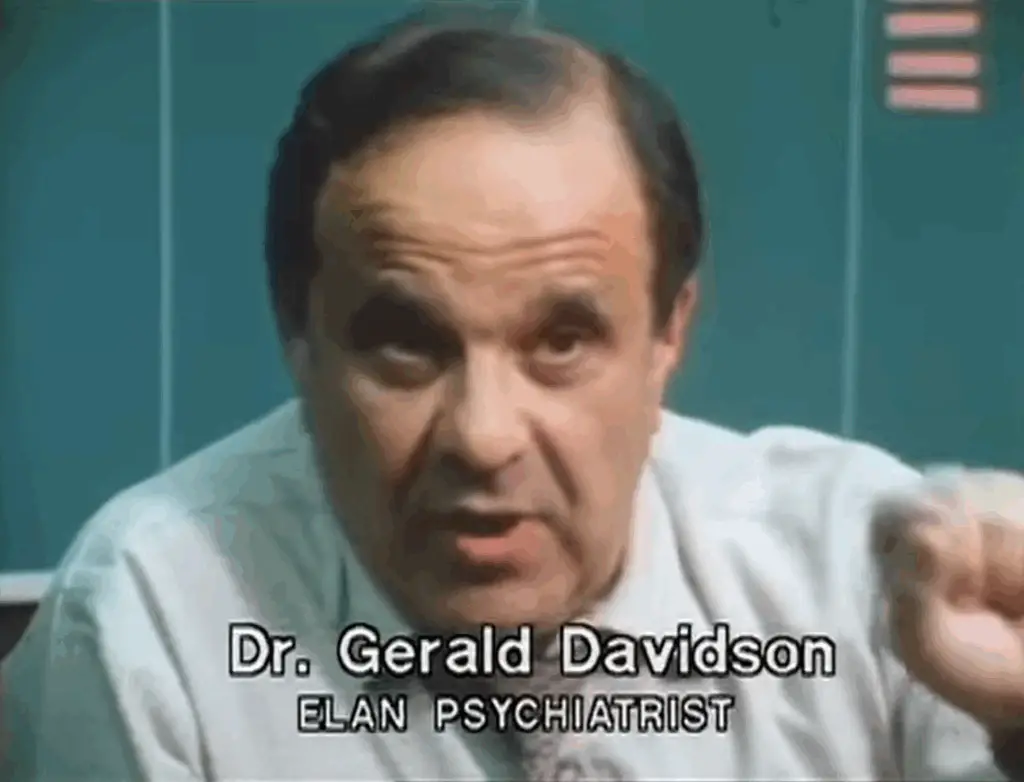

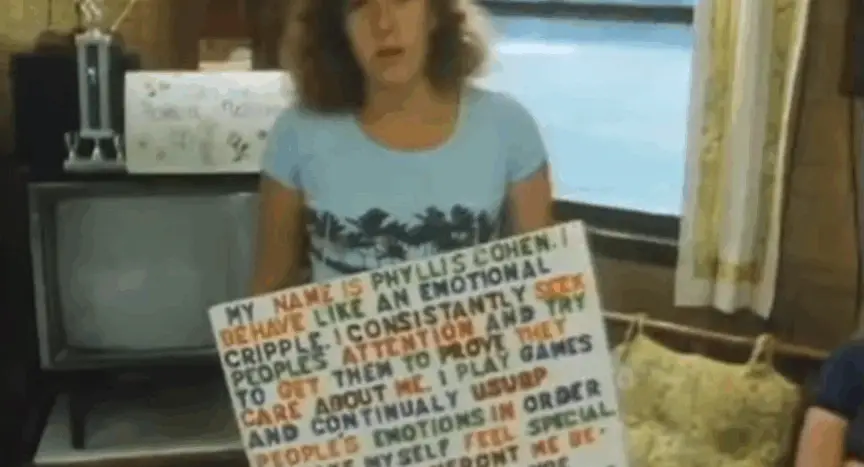
From there the documentary crew travels to New England to visit the infamous Elan School. Basically, it was a boarding house for children with drug and alcohol abuse disorders who — instead of being given actual treatment and care — were subjected to horrendous abuse by staff. As in, they literally made children FIST FIGHT each other as part of some sadistic “self help” ritual that’s a clear cut example of felony abuse; it’s absolutely unconscionable that something like this was permitted for as long as it was, and if you really want to feel sick to your stomach, chew on this: the school continued operations until the early 2010s.
In one sequence we watch a few teens forced to stand in a garbage dumpster for punishment. Another child is shackled and forced to wear a bunny suit to discourage fleeing. One young woman screams about how much she craves alcohol while her “peers” bombard her with insults and other disparaging comments. Imagine a world where THAT was considered the best form of treatment available. All of a sudden, the fantastical horrors of Hellraiser and Terrifier aren’t so scary anymore.
As grotesque as the Elan School segment may be, even it pales in comparison to the horrors on display at the Sagamore Children’s Centre in Long Island, where we listen to a C-level director plainly, unemotionally describe the possibility of giving an “uncooperative” patient a lobotomy. By the way, that patient is a teenager with severe cognitive impairments who is literally bound and gagged 23 hours a day and forced to lumber around wearing a football helmet in the rare occasions he’s actually untied from the bed. Earlier in the documentary, there’s footage from a similar institution in Pennsylvania. Listening to the understaffed, overwhelmed caretakers mull the inevitable fates of the children momentarily in their facility is the kind of thing that makes you despise the health care system of America.
Far and away the most troubling aspect of Children of Darkness, already one of the most distressing and unnerving documentaries of all time, is the segment on the notorious South Beach psychiatric facility in New York. Here, we learn about no less than three patient deaths, including one involving a child who was given a drug the staff knew he was allergic to and essentially left to die. Forget malpractice, what’s shown in this documentary is absolutely, unequivocally acts of premeditated murder. Alas, not only were the “physicians” responsible for the deaths not charged, they weren’t even FIRED — just transferred to different departments.
If the mental health care “services” were that bad in New York — one of the more funded and adequately staffed states in terms of said “services” — I can’t even imagine what sort of horrors were going on in places like Mississippi and Alabama in the early ‘80s. I’m immediately reminded of the Dozier School for Boys in Florida, where children were raped, brutalized and killed under the watch of the state for nearly 100 years.
This isn’t some third world dictatorship. It’s America, and you can STILL see such horrid vestiges in hundreds of for-profit treatment centers, rehab clinics, juvenile detention centers, foster care units and groups homes on any day of the week.
Whenever politicians insult our intelligence and waste our time by railing against horror movies or rap lyrics or violent video games, I’m thinking about all of the real world terror they’re not only perpetrating against children, but actively funding with taxpayers dollars. Something like Children of Darkness isn’t so much a movie as it is an indictment — a collective call to pull our heads out of our asses and acknowledge the reality before us.
It’s tempting to watch this documentary and say “Well, it was a different time and a different era and obviously conditions have improved since then.” Except they haven’t. The same broken infrastructure that produced the horrors of Children of Darkness are still in place today and we’re not really any closer to correcting the core issues than we were in 1983.
It’s not an easy film to watch, but it’s certainly an important one to view. If nothing else, it’s a stark reminder that the real horror isn’t supernatural or metaphysical, but what happens behind closed doors in our own communities. You won’t see the world the same way after watching Children of Darkness … and that’s for the better.